
For a lot of NZ businesses, fleet technology starts with one simple question: “Where are my vehicles?”
That is where GPS tracking earns its keep. It helps you see where vehicles are, where they have been, and whether your team is running on schedule. For many operators, that visibility alone can make a real difference.
But for a growing fleet, GPS tracking is only one part of the job.
Once you are managing multiple vehicles, drivers, jobs, service dates, WOFs, regos, RUC, inspections and operating costs, the bigger question becomes: “How do we keep the whole fleet under control?”
That is where fleet management software comes in.
For NZ businesses, the difference matters. A system that only shows dots on a map may help with location visibility, but it will not necessarily help you reduce admin, stay ahead of compliance, manage servicing, or understand what your vehicles are really costing you.
What GPS tracking does well
GPS tracking gives fleet managers real-time or near real-time location visibility.
- Seeing where vehicles are during the day
- Checking routes and trip history
- Improving dispatch decisions
- Reducing unnecessary calls to drivers
- Helping customers with more accurate arrival updates
- Identifying unusual vehicle use
- Supporting safer, more accountable driving
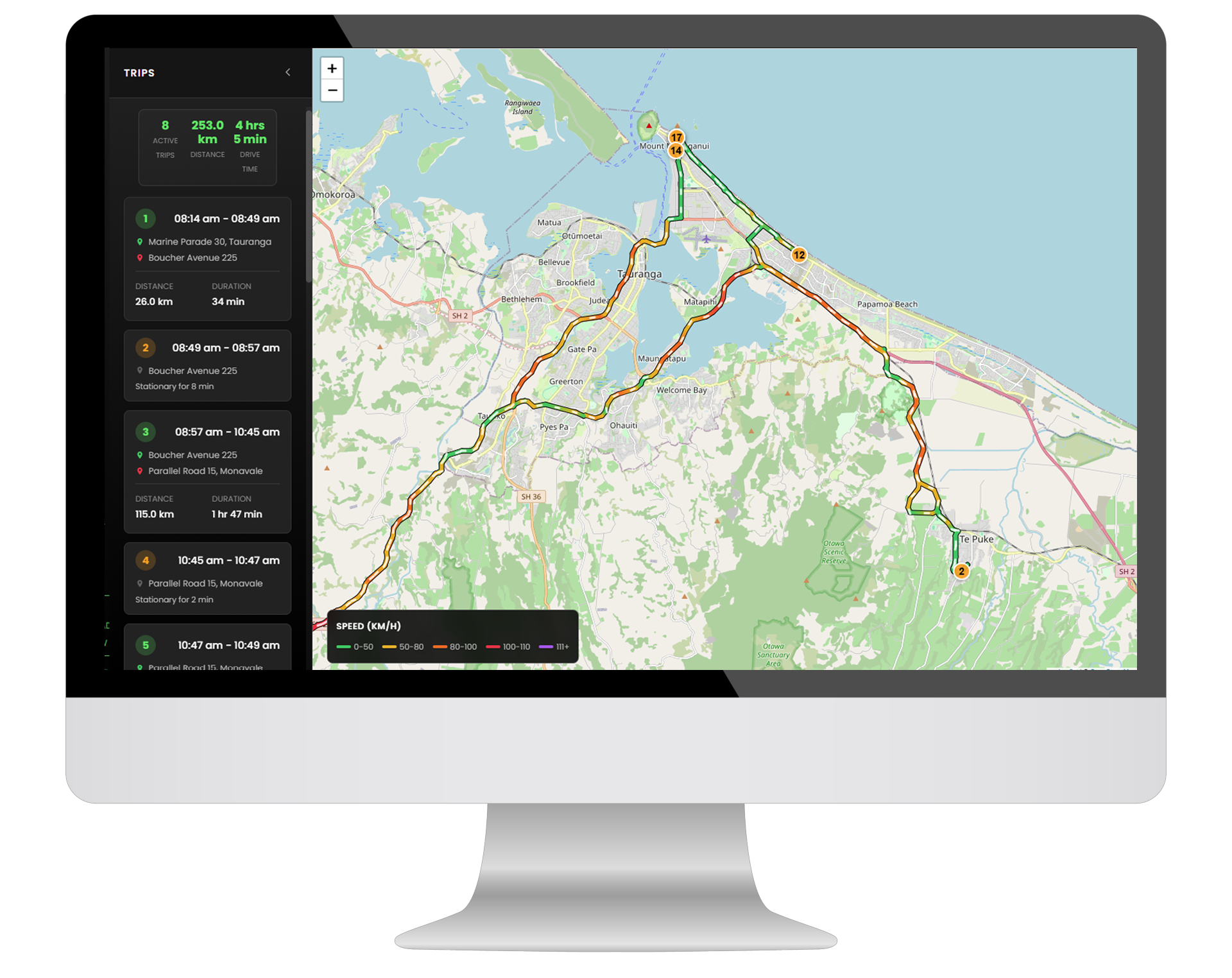
For businesses with mobile teams, trades, delivery vehicles, service vehicles, utes or light commercial fleets, GPS tracking can quickly become useful.
If your main problem is “I do not know where my vehicles are”, GPS tracking is a good starting point.
But most fleet problems do not stop there.
Where GPS tracking starts to fall short
A vehicle’s location is useful, but it does not tell the whole operational story.
GPS tracking alone may not answer questions like:
- Which vehicles are due for WOF or rego?
- Are RUC licences up to date?
- Which vehicles have unresolved defects?
- Are inspections being completed properly?
- Which vehicles are costing more to maintain?
- Is a service overdue?
- Which assets are being underused?
- Can the office team see the same information as the operations team?
- Are records easy to find if something goes wrong?
These are the questions that start to matter as a fleet grows.
In NZ, compliance is not optional. Rego, WOF, RUC, servicing, inspections and maintenance records all need to be managed properly. If these processes sit across spreadsheets, inboxes, whiteboards and memory, things get missed.
That is usually when a business needs more than GPS tracking.
What fleet management software adds
Fleet management software connects the operational pieces around each vehicle.
- GPS tracking and vehicle location
- Vehicle records
- Driver or user assignments
- WOF and rego dates
- RUC information
- Maintenance and servicing
- Digital inspections
- Defect reporting
- Service centre workflows
- Fleet costs and operational data
- Reminders and reporting
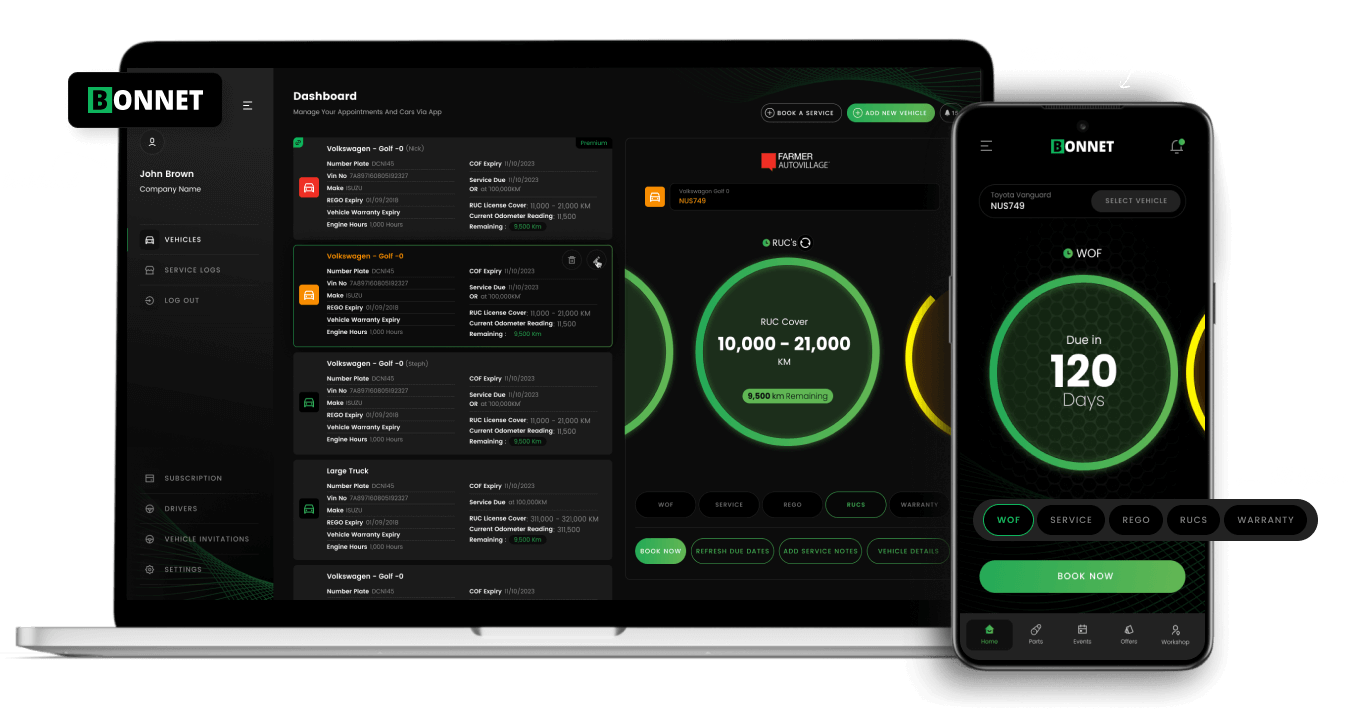
The goal is not just to know where a vehicle is. The goal is to know whether it is road-ready, compliant, productive and being managed properly.
For a NZ fleet, that broader view can save a lot of time.
Instead of chasing paperwork, checking spreadsheets, calling drivers, and manually updating records, the team can work from one system.
Why this matters for NZ fleets
NZ fleets have a few specific pressures.
Vehicles often cover a mix of city, regional and rural work. Businesses may operate utes, vans, trucks, trailers, specialist vehicles or mixed fleets. Compliance requirements such as RUC, WOF and rego need to be managed carefully. Service intervals and inspections can be easy to miss when vehicles are spread across different teams or locations.
For smaller teams, the issue is usually time. One person may be managing vehicles on top of their actual job.
For larger teams, the issue is consistency. Different depots, drivers or departments may manage vehicles in different ways.
In both cases, the risk is the same: fleet information becomes scattered.
When that happens, businesses lose visibility over more than location. They lose visibility over condition, compliance, utilisation and cost.
GPS tracking tells you where. Fleet software tells you what needs attention.
A simple way to think about it is this:
GPS tracking tells you where a vehicle is.
Fleet management software tells you what needs attention.
- A rego renewal coming up
- A WOF that needs booking
- RUC that needs checking
- A failed inspection
- A service that is overdue
- A vehicle defect that needs action
- A repeated issue with one asset
- A pattern of downtime or high maintenance cost
This is where fleet software becomes commercially useful. It helps a business move from reactive fleet admin to proactive fleet management.
When GPS tracking may be enough
GPS tracking may be enough if:
- You only need location visibility
- Your fleet is small and simple
- Compliance is handled elsewhere
- You do not need inspection or maintenance workflows
- You are not managing many vehicle-related admin tasks
- You mainly want to improve dispatch or route visibility
For some businesses, that is fine.
But if your fleet admin is already becoming a burden, GPS tracking by itself may not solve the bigger problem.
When to choose fleet management software
Fleet management software is usually the better fit when you need to manage the full vehicle lifecycle.
- Buying or onboarding vehicles
- Assigning vehicles to teams
- Tracking usage
- Managing servicing
- Recording inspections
- Handling defects
- Staying ahead of WOF, rego and RUC
- Working with service centres
- Reporting on operational data
- Reducing manual admin
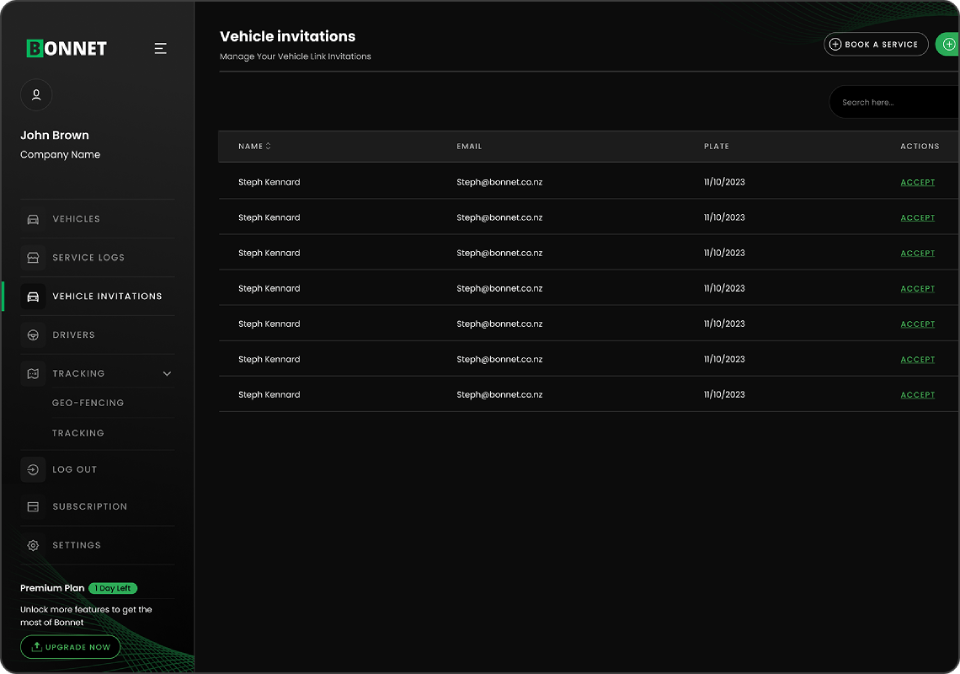
This is especially important for businesses where vehicles are central to daily operations. If a vehicle is off the road, non-compliant, double-booked or poorly maintained, it can affect jobs, customers and revenue.
What to look for in fleet management software in NZ
When comparing fleet management software in NZ, look beyond the map.
1. Does it handle NZ compliance requirements?
The system should support the way NZ fleets actually operate, including rego, WOF and RUC workflows.
2. Can it manage inspections and defects?
Digital vehicle inspections help teams capture issues early and create a clearer record of what happened.
3. Does it connect servicing and maintenance?
Fleet software should make it easier to see upcoming service needs, maintenance history and vehicle downtime.
4. Is the information easy for the whole team to use?
Fleet managers, operations teams, drivers, admin staff and service centres may all need access to different parts of the same information.
5. Does it help you make better decisions?
Good fleet software should turn operational data into useful insight. Which vehicles cost the most to run? Which ones are underused? Where are issues repeating?
6. Can it grow with the business?
A system that works for five vehicles should not fall apart at fifty. Choose software that can support more vehicles, more users and more workflows over time.
The real value is joined-up fleet data
The biggest benefit of fleet management software is not one single feature. It is the way the information connects.
Location data is useful. Compliance data is useful. Inspection records are useful. Service history is useful.
But when those things sit together, they become far more valuable.
A fleet manager can see not just where a vehicle is, but whether it is due for work, whether it has an open defect, whether it is being used efficiently, and whether it is ready for the next job.
That is the difference between tracking vehicles and managing a fleet.
Where BONNET fits
BONNET is built for businesses that need more than basic vehicle tracking.
It helps fleet teams bring vehicle information, compliance, servicing, inspections and operational data into one place. That means less time chasing admin and more control over the vehicles your business depends on.
For NZ businesses managing GPS tracking, fleet software, RUC, rego, WOF, service centres and day-to-day vehicle operations, BONNET gives the team a practical way to stay organised.
Whether you are running utes, vans, trucks, service vehicles or a mixed fleet, the aim is the same: keep vehicles visible, compliant, maintained and ready to work.
Final thought
GPS tracking is a useful tool. But it is not the same as fleet management.
If all you need is to see where vehicles are, GPS tracking may be enough. If you need to manage compliance, inspections, servicing, RUC, rego, WOF, maintenance and operational decisions, fleet management software is the stronger option.
For most growing NZ fleets, the real value is not just knowing where vehicles are.
It is knowing what needs to happen next.
Ready to get better control of your fleet?
Start with BONNET here: https://fleet.bonnet.co.nz/register/