
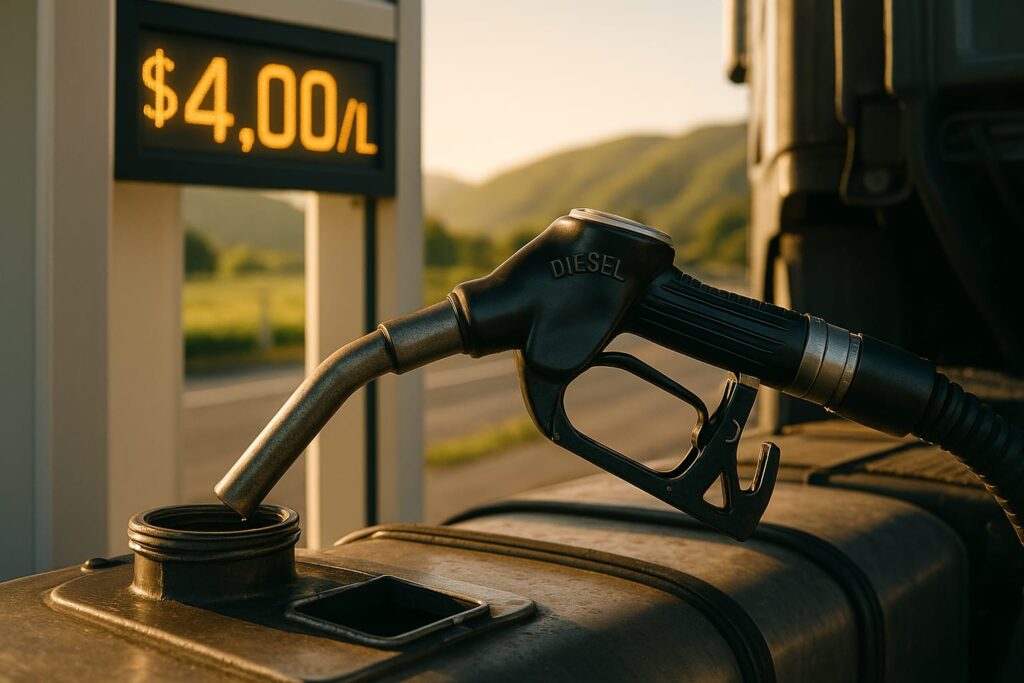
 Diesel just cracked $4 a litre in parts of New Zealand. The Strait of Hormuz disruptions have sent fuel prices surging – and NZ imports 100% of its refined fuel, so every global shock hits us hard.
For transport operators, fuel is already 30-40% of total operating costs. At $4/litre with a 50-truck fleet, you could be looking at $3 million a year on diesel alone.
Even a 5% reduction at that scale puts $150,000 back in the business.
This guide covers the obvious fuel savings – plus some out-of-the-box ideas most operators miss.
The Usual Suspects: Where Fleets Waste Fuel
You probably know these. But knowing and measuring are different things.
1. Idling
A truck idling for one hour burns approximately 4 litres of diesel. Ten drivers idling 30 minutes a day at loading docks = 20 litres wasted daily = 7,000+ litres a year. Doing nothing.
2. Poor Route Planning
Longer routes, predictable congestion, doubling back on deliveries. Without GPS data showing actual routes driven, these inefficiencies stay invisible.
3. Aggressive Driving
Harsh braking, rapid acceleration, excessive speed. Studies show aggressive driving increases fuel consumption by 15-30%. It also destroys brakes, tyres, and drivetrains.
4. Under-Inflated Tyres
For every 10% a tyre is under-inflated, fuel consumption increases by roughly 1%. Across a full set of truck tyres consistently 20% below spec, you are burning 2% more fuel on every kilometre.
5. Skipping Services
A poorly maintained engine uses 10-20% more fuel. Clogged air filters, old fuel filters, worn injectors, degraded engine oil – they all add up. This is the easiest fix and the most often ignored.
The Out-of-the-Box Fuel Hacks Most Operators Miss
This is where it gets interesting.
6. Remove Unused Roof Racks and Accessories
Aerodynamic drag is a bigger deal than most people think. Unused roof racks, bull bars, and accessories on utes and vans can increase fuel consumption by 5-10% at highway speeds. If it is not being used, take it off.
7. The Warm-Up Myth
Modern diesel engines do not need long warm-up periods. Idling for 5-10 minutes “to warm up” is burning fuel for no reason. 30 seconds is enough for modern engines – then drive gently for the first few minutes.
8. Fuel Card Fraud
NZ fleets lose an estimated $2,000-$5,000 per year to fuel theft and fraud. Drivers filling personal vehicles, filling jerry cans, or buddy-fuelling. Cross-reference fuel card transactions with GPS location data – if the truck was not at the servo when the card was used, you have a problem.
9. Right-Size Your Fleet
This is the big one nobody talks about. Do you actually need 20 trucks, or could 15 trucks with better scheduling do the same work? Every vehicle sitting idle in the yard is costing you insurance, depreciation, servicing, and compliance – even when it is not burning fuel.
10. Dead Running and Empty Returns
The most expensive kilometre is the one driven empty. If 30% of your fleet kilometres are empty return trips, you are effectively paying $4/litre for fresh air. Look at backload opportunities, route consolidation, and whether competing operators in your area would share return loads.
11. Weight Audit
Every 100kg of unnecessary weight costs roughly 1% more fuel on heavy vehicles. Tools, equipment, and “stuff” accumulate in vehicles over time. Run a quarterly weight audit – you might be surprised what is riding around for no reason.
12. Vehicle Pooling (Coming Soon to BONNET)
Here is one we are working on: vehicle pooling. Instead of assigning one vehicle per driver, pooling lets multiple drivers share a smaller fleet based on actual need.
The result? Fewer vehicles doing more work. Less fuel burned overall. Lower insurance, maintenance, and compliance costs across the board.
BONNET is building vehicle pooling tools that let fleet managers see which vehicles are underused, which drivers need vehicles when, and how to reduce fleet size without reducing capacity. Less vehicles on the road = less diesel burned. Simple.
 7 Quick Wins You Can Start Today
- Measure idling – set alerts for any vehicle idling over 10 minutes
- Review actual vs planned routes weekly using GPS data
- Score driver behaviour – share results as coaching, not punishment
- Weekly tyre pressure checks on all heavy vehicles
- Stick to service schedules – track them so nothing slips
- Cross-reference fuel cards with GPS to catch anomalies
- Set fuel benchmarks per vehicle – flag anything trending above baseline
 How BONNET Helps NZ Fleets Cut Costs
BONNET does not track fuel directly – but it gives you the tools that make fuel savings happen.
GPS tracking shows exactly where your vehicles go, how long they idle, and whether drivers are taking efficient routes. This is the foundation for spotting waste. See GPS tracking options.
Inspection checklists mean drivers check tyre pressure, fluid levels, and vehicle condition every shift. Catching a slow tyre leak on Monday saves you fuel all week.
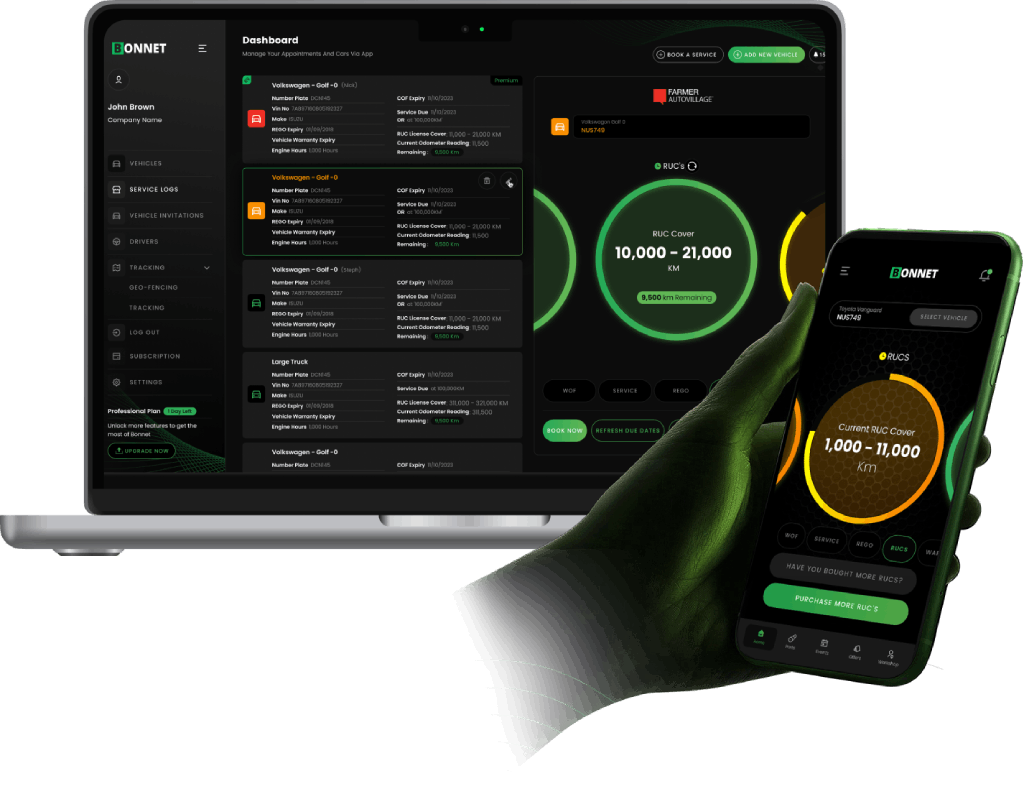
Service scheduling keeps engines, filters, and tyres maintained on time. BONNET tracks every service interval and alerts you before anything is overdue. Well-maintained vehicles use less fuel – it is that simple.
RUC management aligns your Road User Charges with actual distance travelled. Cross-reference RUC distance with fuel purchases and you get accurate litres-per-100km without manual calculations.
Compliance in one dashboard – WOF, rego, COF, servicing, GPS, inspections. No more spreadsheets, no more missed dates, no more fines eating into the savings you just made on fuel.
Vehicle pooling (coming soon) will let you reduce fleet size while maintaining capacity. Fewer vehicles = less fuel = lower costs across the board.
We are proud to partner with Transporting New Zealand to help the freight industry operate smarter – especially when diesel is at $4 a litre.
Start Cutting Fuel Costs Now
Every litre saved at $4 goes straight to your bottom line. The operators who survive high diesel prices are not the ones who complain about it – they are the ones who measure, optimise, and eliminate waste.
For fleet operators:
Register for BONNET Fleet – GPS tracking, compliance, inspections, and fleet management in one platform.
For individual vehicle owners:
Download BONNET free on iOS or Android.
BONNET is a New Zealand fleet management platform helping transport operators track vehicles, manage compliance, and reduce operating costs.